Changing Course
Share this blog
Latest Maritime Vacancies
Crewing Superintendent (CSOV) – Cyprus
Head of Cyber Security | Cyprus/Remote
Marine Operations Superintendent – LNG – Qatar
Senior Sales Manager – Europe
Marine Insurance Account Executive – New Business – UK
Shining a Spotlight on the Next Generation of Maritime Talent
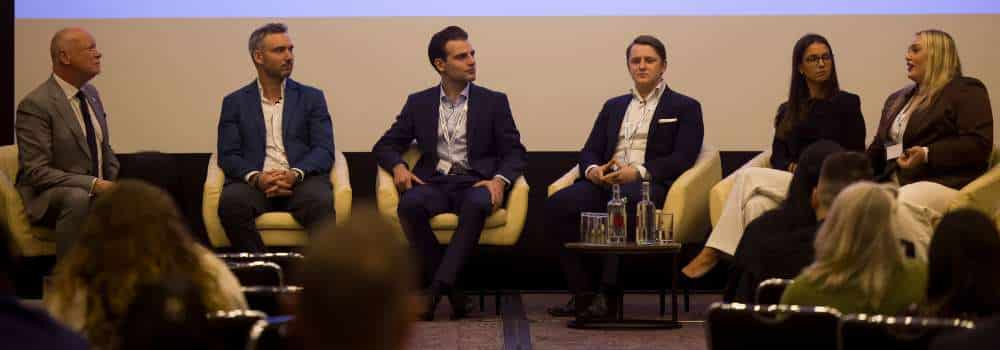
One of the most refreshing sessions at the Maritime People & Culture Conference 2026 came from Spinnaker’s 30 Under 30 panel, chaired by James Wilkes, Managing Director at Gray Page. Bringing together the top 5 finalists from across the industry, the discussion offered an honest look into how younger professionals are finding their way into maritime, and what keeps them there.
What stood out immediately was how few of the panellists had actually planned a career in shipping.
Amilia Busby had wild childhood dreams of a career as a glass blower, then a skydiving instructor, before eventually finding her true calling as an engineer after discovering the Merchant Navy during COVID. Poppy Haward joked that she once wanted to be a truffle farmer and later an underground train driver before realising that a more realistic career choice was that of becoming an actuary. Fabian Fussek started his first business at just 12 years old and is now Co-Founder and CEO of Kaiko Systems, while David Greiffenberger once dreamed of being a professional footballer before finding his path in maritime. George Thompson’s route felt perhaps the most naturally linked to the industry, having always been involved in sailing and watersports before moving into yacht design and wind propulsion for commercial ships.
A recurring theme throughout the panel was that maritime still isn’t visible enough to young people. As Poppy pointed out, unlike industries such as law, banking or consulting, shipping simply isn’t pushed at university level in the same way. Several panellists described “falling into” maritime almost by accident.
The conversation then shifted to what younger employees actually want from employers, and it was far more nuanced than the usual stereotypes around Gen Z.
Structure was a big topic. David spoke positively about graduate schemes and rotational programmes, explaining how exposure to different departments helps younger employees understand the bigger picture and discover where they fit best. He also highlighted the value of Columbia’s buddy system, where new starters are encouraged to speak up and contribute, even in front of senior leadership.
At the same time, the panel agreed that younger employees also need space to grow independently. Amilia explained that while structure is important early on, eventually people need room to “flourish on their own”. She noted that Gen Z employees want to feel valued and trusted to show what they can do, and when companies create that environment, engagement naturally follows.
Mentorship was another major theme. Fabian said he “cannot stress the importance of mentorship enough”, but also pointed out that being a good mentee matters too. Seeking advice, trying things out and maintaining relationships beyond a single role were all highlighted as important parts of career development. He added that he is constantly surprised by how willing experienced people are to share knowledge if someone simply asks.
The panel also challenged assumptions around younger workers. Fabian explained that while many startups rely heavily on under-30 talent, his business has intentionally hired more experienced people alongside younger employees to create balance. George echoed this, saying that having a mix of ages and experiences within a team is what really drives success.
Towards the end of the session, the panellists shared what keeps them engaged at work. For Amilia, it’s leaders who actively teach and invest in her development. For Poppy, it’s being able to contribute meaningfully to business decisions while also having activities outside of work, such as sport and social events. David stressed the importance of clear career progression and transparency around what younger employees need to do to advance.
More than anything, the session highlighted that younger professionals are not asking for less from work, they are asking for clarity, purpose, support and opportunities to contribute. The message to the industry was simple: if maritime wants to attract and retain the next generation, it needs to create environments where young people can see both a future and a purpose for themselves within it.